Should You Buy Real Estate in Mexico City in 2026?
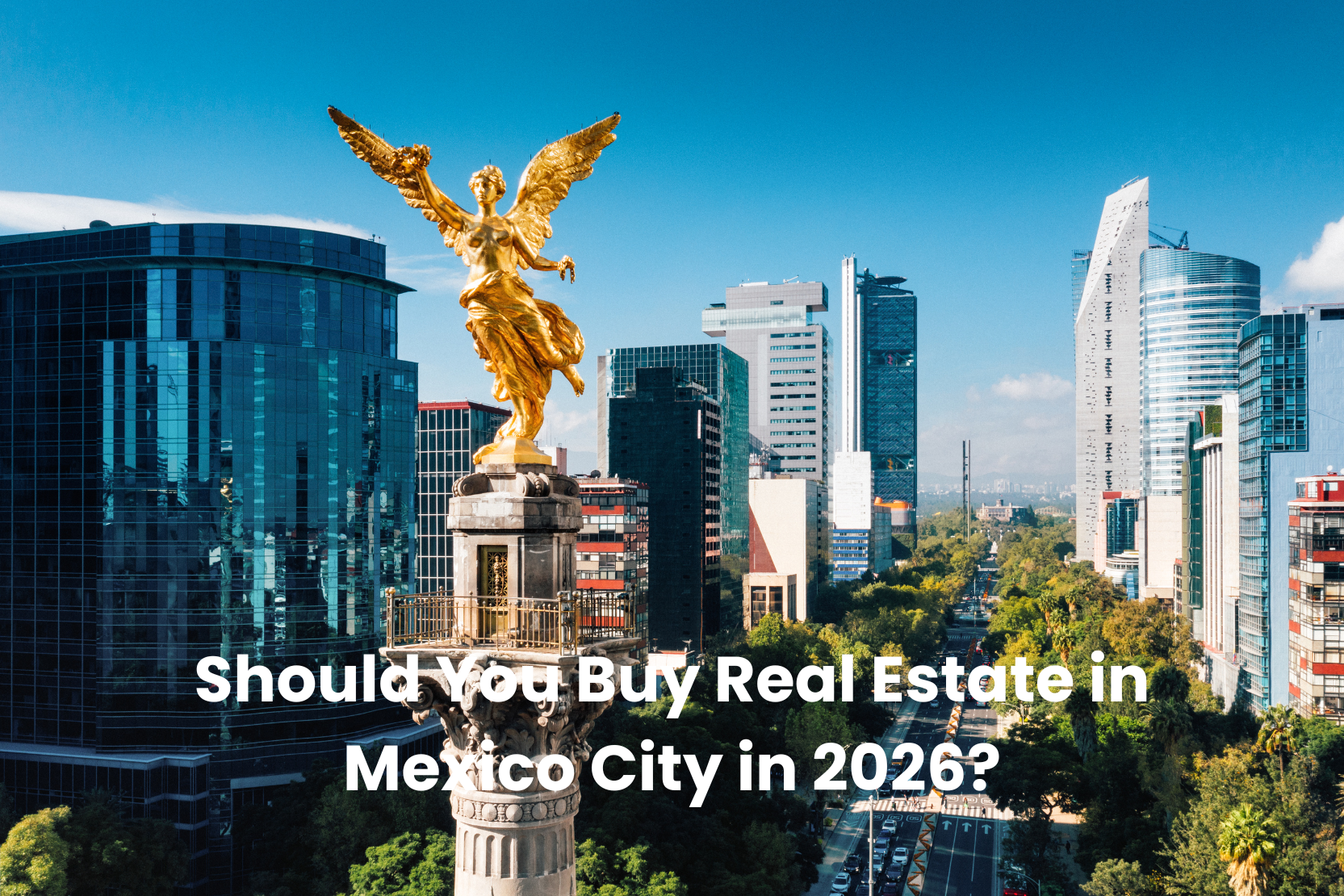
Is Buying Real Estate in Mexico City In 2026 A Smart Move?
It's time to get down to the nitty-gritty: Mexico City’s real estate market is booming, and the numbers back it up.
The Numbers You Actually Need to Know
According to TheLatinvestor's 2025 market analysis, Residential property prices jumped 8.1% in 2024; new construction properties saw a 9.9% growth.
However, there is an important point here: New home construction actually decreased by 0.4% year-over-year, which has led to a lack of inventory that is driving prices up.
Prices of homes near public transportation grew by 7% in 2024, alone. Meaning: Location is more valuable than ever before, and transportation access is now a premium service that people are willing to pay for.
How International Buyers Are Changing Everything
Remote work has dramatically changed the demographics of who is purchasing in Mexico City. Retirees and young digital nomads from the United States found they could purchase homes in areas such as Roma Norte and Condesa for much lower than comparable U.S. cities while also earning the same amount of money.
According to a report released by Esales International, American buyers now make up a majority of the foreign investment into Mexico City.
Baby boomers are purchasing retirement homes, while younger buyers are using Mexico City as a remote base for working and investing in rental properties. The "affordability arbitrage" is still attractive.
Although prices are increasing in Mexico City, the cost per square meter in the desired neighborhoods is still much cheaper than in California or New York.
Mexico City Neighborhoods Breakdown
Not all neighborhoods in Mexico City are equally attractive. Here are some of the neighborhoods that offer the best opportunities for investing: Venustiano Carranza experienced 55% growth over the past five years. According to TheLatinvestor, it is currently one of the most affordable options, however, it may experience a high level of appreciation.
Roma Norte and Condesa continue to be highly sought after by international buyers and Airbnb investors. Rental yields in these central neighborhoods range between 5-7% annually.
Polanco represents the luxury end of the market, and is attractive to ultra-high net worth individuals. Polanco commands premium pricing, ranging upwards of $5,500 per square meter.
The mid-range sweet spot—properties between 2-5 million pesos ($120,000-$300,000)—shows the fastest absorption rates and highest transaction volume.
What Makes 2026 Different
Mexico's "nearshoring" trend is a significant development. Due to the recent passage of the USMCA trade agreement, companies are beginning to move their manufacturing operations out of Asia and into Mexico.
Foreign direct investment is pouring into Mexico, creating jobs, and drawing expat employees to major cities including Mexico City, and in turn, driving housing demand in both industrial corridors and major cities.
Infrastructure improvements will positively impact the ability of residents to travel to and from destinations around Mexico City. As government funds are invested in metro expansion and urban renewal, previously overlooked neighborhoods are being unlocked. Properties located near the newly improved infrastructure are showing increased appreciation.
The Airbnb Reality Check
Although short-term rentals are still generating a profit in tourist heavy areas, regulations are tightening. By 2026, we anticipate that the licensing requirements for short-term rentals will increase, tax rates will rise, and rental days will become restricted in major tourist zones.
When projecting cash flow based on short-term rentals, factor in these operational costs.
However, despite the regulatory changes, rental yields in prime tourist areas of Mexico City, such as Playa del Carmen and other central neighborhoods, remain strong due to the steady stream of tourists and demand from digital nomads.
The Investment Case
If you are interested in utilizing Mexico City as an investment platform (and not simply as a place to live), then Mexico City is appealing because it provides an opportunity to diversify outside of saturated U.S. markets at relatively affordable price points.
Affordability: Although $179,000 median prices for a home do not seem cheap, consider the fact that the median home price in most U.S. metropolitan areas is above $400,000. Your dollar goes further in Mexico City, and you gain exposure to a rapidly growing urban market.
Rental Income Potential: Rental yields in Mexico City of 5-7% per annum far exceed returns available in most U.S. savings accounts, and many stock dividend payments. If you are developing a portfolio of passive income producing assets, Mexico City should definitely be considered.
Appreciation Trajectory: Projections indicate that home prices in Mexico City will appreciate 4-6% per annum until 2026 and possibly beyond. The projected appreciation is not spectacular, but it is supported by the fundamental supply and demand dynamics of the market rather than speculation.
The Honest Challenges
Foreign buyers face several challenges when attempting to acquire real estate in Mexico. When acquiring a property within 50 kilometers of Mexico's coastline or within 100 kilometers of Mexico's border, a fideicomiso (bank trust) is required.
While the fideicomiso is not necessarily a deterrent, it does add additional complexity to the process, and ongoing trust fees will need to be accounted for in your budget.
Qualified local counsel will be necessary. Title problems, particularly those related to ejido land (communal land) in areas like Tulum, have caused problems for foreign investors who did not properly conduct their due diligence.
Conclusion
If you are looking for geographic diversification, rental income potential, and exposure to a market with solid demographic fundamentals, Mexico City is definitely worth serious consideration in 2026.
A continuing supply/demand imbalance is expected to keep prices elevated. Continued interest from international buyers is expected to fuel the demand side of the equation. Ongoing investments in infrastructure are likely to drive continued price appreciation.
Success will require specificity. Research neighborhoods thoroughly. Develop realistic financial models that account for all costs (fideicomiso fees, property management fees, etc.). Consider long term holds (5-10 years) versus short term flips.
While the opportunity exists, it is essential to approach the market with a professional mindset, work with legitimate local experts, and the numbers can work in your favor.
Sources:
TheLatinvestor Mexico City Property Market Outlook (2025)
Esales International Mexico Property Market Predictions 2026 (2025)
Mexico Business News Housing Data (2024)
Read more:
Should You Buy Chicago Real Estate in 2026?
Should You Buy NYC Real Estate in 2026?
Can Zohran Mamdani's rent freeze in NYC actually work in 2026?