Can Zohran Mamdani's rent freeze in NYC actually work in 2026?
Mayor Eric Adams raised your rent. Zohran Mamdani will freeze it.
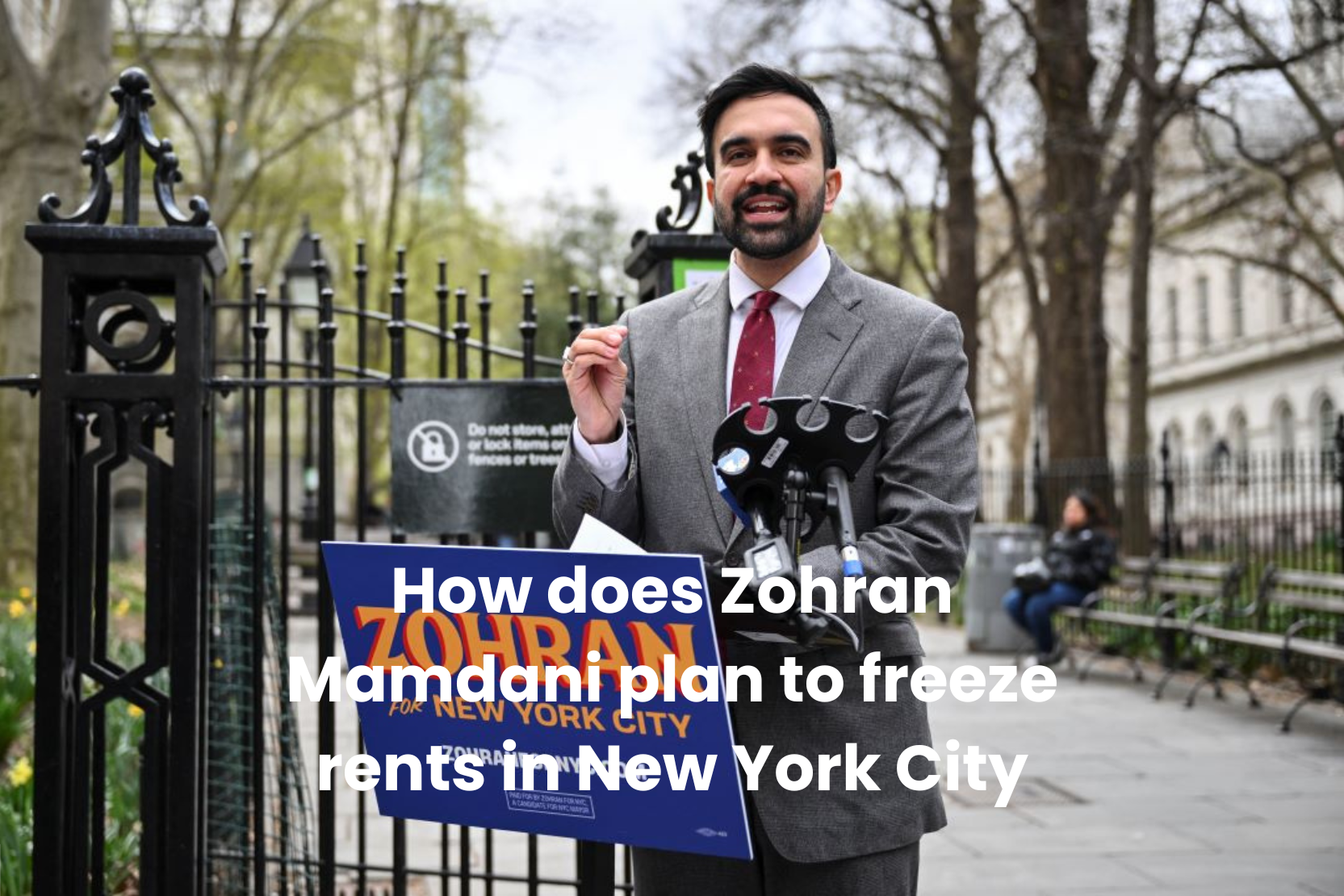
Zohran Mamdani ran the 2024 NYC Marathon with "Eric Adams raised my rent. Zohran will freeze it" written on his shirt. He was not simply trolling, he was launching a winning campaign strategy. On election day in November 2025, voter turnout hit its highest level since 1969, and Zohran Mamdani won by a landslide. But, the real challenge begins now — can he really follow through?
How many people will be affected?
This is not a small number of very fortunate renters living in ridiculously cheap apartments. Rent stabilization applies to approximately 1 million apartments — that is roughly 41% of all rental units in NYC — and affects approximately 2 million people. Most of these people live at incomes of approximately $60,000 per year, and almost half of these people pay more than 30% of their income toward rent. During Mayor Adams' term in office, for example, they were subjected to four consecutive years of rent increases, including 3-4.5% increases that took effect in October.
How does the system actually work?
Here's the thing: the mayor cannot simply wave his hand and freeze rents. Rather, he controls the Rent Guidelines Board — 9 people who determine the maximum rent increase permitted annually. As required by statute, the RGB must take into consideration actual factors such as inflation, taxes, insurance costs, and whether landlords can maintain the buildings they own.
While the mayor does have power to appoint to the RGB, the appointments are not limitless. Once Mayor-elect Mamdani takes office in January, the mayor will control 8 of the 9 seats on the RGB unless Mayor Adams fills the remaining seats prior to January, which he may. It is this way that former Mayor Bill DeBlasio achieved three rent freezes during his tenure — he allowed time for him to appoint board members who supported his vision.
The Problem: Buildings are having trouble too.
The current RGB members agree that the numbers look ominous. At least 10% of rent-stabilized buildings are operating at a loss, with the costs of maintaining the buildings being greater than the revenue generated by the rents collected.
There are currently 26,000 "ghost apartments," vacant apartments in rent-stabilized buildings that landlords cannot afford to renovate and therefore cannot rent out, due to the high cost of renovations plus the low rents that can be charged upon completion.
Things got worse after 2019, when New York state passed legislation limiting how much landlords could pass along to tenants for the costs of building renovations.
Insurance payments have become one of the most significant expenditures for building owners, and exceed the cost of heat in 25% of buildings. Moreover, at least 25% of buildings are generating cash flow deficits, when considering the repayment of their mortgage obligations.
Why Economists Don't Like This Idea
As an uncomfortable truth, in a 2012 survey of the top 20 economists, only 2% believed that rent control has improved the availability of affordable housing. Even Nobel Prize winner Richard Thaler jokingly suggested that the next question in the survey should be "whether the earth orbits the sun" — so clear was his view that the correct answer was obvious.
The concern of economists is that of incentives. When San Francisco expanded rent control in the 1990s, the amount of rental housing supply decreased by 15% over the course of the next decade. Landlords either converted the apartments into condominiums, or simply ceased renting out the units in order to avoid the regulatory requirements. The end result was that market rents actually increased, and gentrification accelerated — the exact opposite of what was intended.
Research conducted in Massachusetts demonstrates similar results. When rent control was terminated in Massachusetts in 1994, property values jumped 45%, and landlords suddenly found reason to improve the condition of their buildings again.
The real issue here is that rent freezes do not generate additional housing — rather, they simply shift the distribution of the already limited supply. Long-term tenants often remain in larger apartments they no longer need, while younger people and growing families struggle to find affordable places to live. We see the downstream effects of this every day in New York City through our work at Sparkly Maid NYC, where frequent move-ins and move-outs reflect how constrained and imbalanced the housing market has become.
What Could Go Wrong?
If there are no measures taken to alleviate the cost pressure facing landlords, a prolonged rent freeze could lead to a chain reaction of further decline. Building owners will not have sufficient funds to perform necessary repairs and maintenance on the buildings they own. More and more apartments will become uninhabitable. Construction of new housing will cease. And at the worst possible time for the city — when it needs more housing, not less — the housing supply will shrink.
Additionally, the policy of freezing rents creates winners and losers, and the winners and losers are not always fairly distributed. Winners include existing tenants with rent-stabilized leases.
Losers include everyone else — younger residents, new residents, people looking for an apartment, etc. — and especially people who pay market-rate rents (which average over $4,000) as landlords abandoned the regulated sector and raise rents on the unregulated sector.
Mamdani's Game Plan
To his credit, however, Mamdani recognizes these potential pitfalls. His platform includes measures designed to address the source of the problem: reduced property taxes and insurance premiums that burden the budgets of building owners. If the costs associated with owning buildings decrease, a rent freeze becomes more feasible.
In addition, some RGB members have proposed alternative policies that are more intelligent, such as rent increases based on performance. For example, buildings with good maintenance records could increase rents consistent with the costs of maintaining the buildings. Bad actors — building owners with poor maintenance records and/or numerous housing code violations — would see rents frozen.
In addition to the rent freeze, Mamdani has pledged to construct 200,000 affordable apartments over the course of the next ten years, double the amount of funding for the repair of public housing, and aggressively prosecute negligent landlords.
The Bottom Line
Can Mamdani freeze the rent? Almost certainly yes, provided he selects the right individuals to serve on the RGB. Can he freeze the rent indefinitely without taking care of the underlying issues? That is when things get complicated.
The housing affordability crisis in New York City is real. Despite rent stabilization, nearly half of the rent-stabilized tenants are rent burdened i.e, spending more than 30% of their gross income on rent and waiting for years for new housing to be constructed is unrealistic for families that are currently unable to afford the rent they pay.
However, economists are virtually unanimous: absent increasing the supply of housing and decreasing the costs associated with land-lording, a rent freeze simply postpones the inevitable housing crisis.
A combination of short-term relief for struggling tenants and long-term solutions to address the crisis would be the best solution. Streamlining the building codes to eliminate unnecessary regulations and allowing landlords to convert unused commercial space to housing units, reducing the insurance and tax burdens of building owners, and constructing more housing units would be the intelligent approach forward.
Mamdani's first major challenge will not be whether he can freeze rents — it will be whether he can do so without exacerbating the housing crisis five years later, a risk that becomes visible on the ground through day-to-day turnover across the city, including what we observe through our work at Sparkly Maid NYC supporting New Yorkers during moves and transitions.
One of the RGB members succinctly stated, "There are times when rent freezes are warranted, but we cannot prejudge the merits." The question is not whether Mamdani has the support of the people to freeze rents — it is whether he has developed a strategy to accomplish this goal without causing unintended consequences. For 2 million New Yorkers, the answer is far more important than any campaign promise.
Read more:
How fast does the NYC subway go?